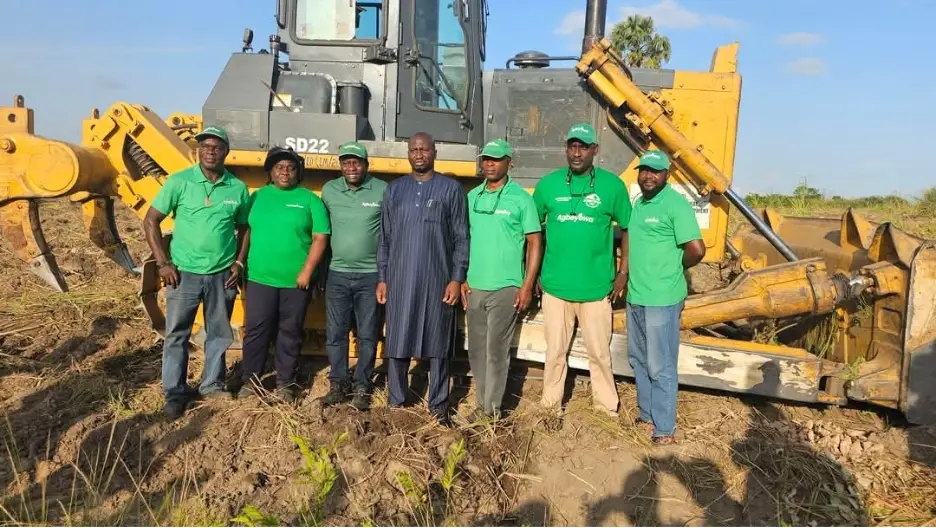
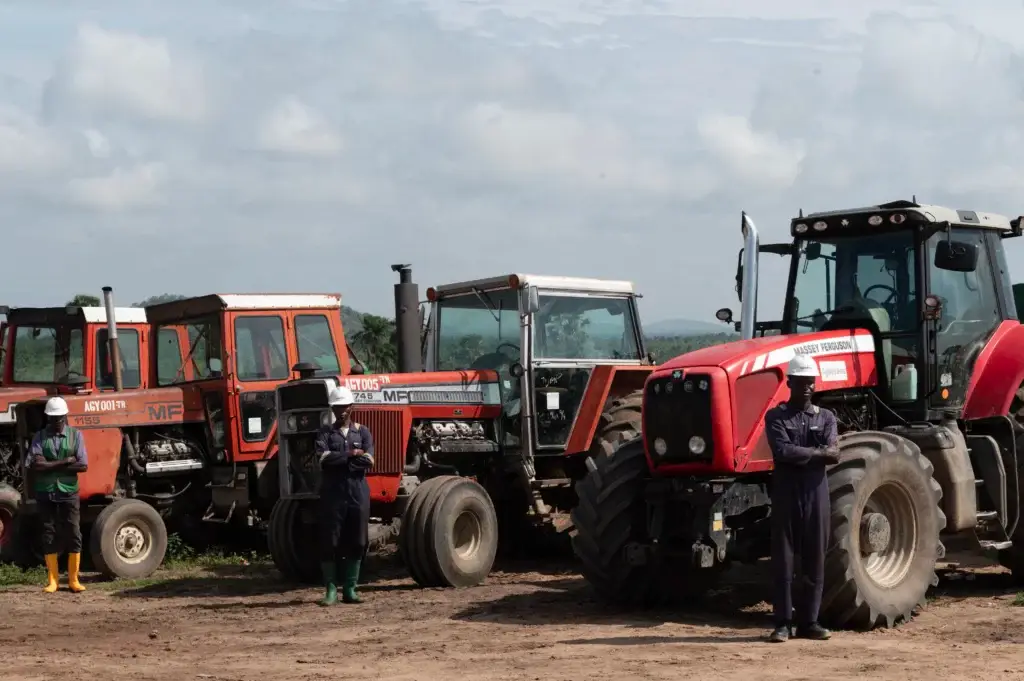
In Ekiti, something consequential is taking root. What began with rows of cassava across cultivated fields is evolving into a partnership between the Federal Government and Agbeyewa Farms, with implications extending beyond primary production.
Some of the world’s most significant economic transformations have originated far from stock exchanges, industrial parks and urban skylines. They have begun on the land. This development logic is increasingly central to the Federal Government’s economic renewal agenda in Nigeria, where agriculture is expected to deliver not only food security, but also employment, investment, industrial inputs and more resilient rural economies. Prosperity, after all, often first emerges in the quiet arithmetic of the field: what is cultivated, productivity per hectare, who is employed and how far produce travels beyond the farm gate.
That policy direction is finding practical expression in the model being advanced by Agbeyewa Farms in Ekiti. Its emphasis on commercial-scale production, improved agronomic practices, processing capacity, smallholder integration and stronger market linkages reflects the broader effort to reposition agriculture as a value-creating economic chain rather than a subsistence activity. It also highlights the importance of partnership. Government provides the enabling environment, while private capital, technology and enterprise translate agricultural potential into tangible economic outcomes.
In Ekiti State, that alignment is already moving from proposition to practice. A growing partnership between the Federal Government and Agbeyewa Farms is bringing public institutional capacity together with private enterprise. By 2025, Agbeyewa reported 5,000 hectares under active cultivation and the creation of more than 1,000 direct jobs.
Those figures tell only part of the story. The company has reported cassava yields of up to 32 tonnes per hectare and starch content of 27.7 per cent, pointing to the possibilities of improved productivity. A May 2024 agreement with the Ekiti State Government set a wider ambition of 100,000 hectares through an out-grower programme. The figures speak to both the scale of the investment and the ambition behind it.
What is emerging is more than another case of government supporting a farm. It offers a practical test of how public policy and private capital can work together around modern agronomy to create economic value. Government brings institutional support and land development capacity, while Agbeyewa contributes investment, technology, commercial farming expertise and an integrated approach to the agricultural value chain.
Federal interest gathered momentum as Agbeyewa expanded its operations. When the then Minister of Agriculture and Food Security, Senator Abubakar Kyari, visited the company’s Ipao-Ekiti operations in February 2025, he declared that the government had “no option than to collaborate” with Ekiti and Agbeyewa on food production and wealth creation.
That endorsement developed into a formal relationship in November 2025, when the National Agricultural Land Development Authority (NALDA) entered into a partnership with Agbeyewa. By May 2026, 1,200 hectares at NALDA’s Oke-Ako Farm Estate had been earmarked for cultivation by the company, moving the relationship from official interest to implementation on the land.
The strength of the partnership lies in that balance. Government is not seeking to replace private enterprise, nor is the investor left to confront structural constraints alone. Public land development capacity is being deployed alongside an existing commercial platform. For Nigeria, still searching for sustainable pathways to food security, the approach deserves attention.
Perhaps the more consequential part of Agbeyewa’s story is its emphasis on productivity. Nigeria’s agricultural challenge cannot be solved indefinitely by expanding the amount of land under cultivation. Population growth, climate pressures and rising costs make yield increasingly critical. Agbeyewa’s reported yield of up to 32 tonnes per hectare illustrates what improved planting materials, mechanisation and disciplined agronomic management can potentially unlock.
Cassava varieties such as AYAYA, White Lion, Dixon and TME 419 are cultivated with attention to yield potential, maturity and starch content. That focus has also benefited from international knowledge exchange. Brazilian cassava specialists visited the company’s Ekiti operations in 2025, with discussions centred on mechanisation, cultivation techniques and production efficiency. Around the farms, a wider proposition is emerging: that higher productivity, processing and enterprise can turn what grows from the soil into jobs, industries and stronger communities.
The significance goes beyond individual crop varieties or farming techniques. Food security is as much about productivity as it is about land. Expanding hectares with poor yields merely magnifies inefficiency. Higher yields, better crop quality and efficient harvesting can lower costs and strengthen profitability. Agbeyewa’s experience becomes more relevant if knowledge and techniques developed within its operations find their way into surrounding farming communities.
That prospect is central to its in-grower and out-grower model. Cooperatives of between 100 and 150 farmers, each managing a 500-hectare production cluster, could connect smallholders to improved planting materials, mechanisation, technical support, aggregation and predictable markets. No single farm can transform Nigerian agriculture alone. An anchor investor can, however, catalyse wider change when its knowledge, technology and market access help raise the productivity of independent farmers.
Processing adds another important layer. Increased production without sufficient industrial demand risks gluts and depressed farm-gate prices. Agbeyewa’s acquisition of Matna Foods Company Limited in January 2026 strengthened its connection with industrial cassava processing, bringing cultivation and value addition closer together within the wider business.
That connection changes the economics of agriculture. Selling crops largely in primary form generates one level of value. Transforming them into industrial inputs creates another, opening opportunities in engineering, energy, packaging, warehousing and logistics. The distinction is important. One is principally about producing commodities; the other is about building industries around what comes from the land.
For Ekiti, the multiplier effect could reach far beyond Agbeyewa’s payroll. Cultivation requires machinery operators, technicians, input suppliers and transporters. Aggregation demands storage and logistics, while processing generates technical and commercial services. The company’s reported 1,000-plus direct jobs are therefore the most visible part of an economic footprint with the potential to support businesses and livelihoods across surrounding communities.
Infrastructure naturally follows the conversation. Large-scale agriculture cannot thrive where rural roads are poor, power supply is weak and storage is inadequate. Kyari himself acknowledged the challenge of moving agricultural produce to markets during his Ekiti visit. As production expands, investments in roads, electricity, communications and logistics move beyond community demands and become necessities for sustaining the economic activity around agriculture.
The opportunity is especially significant for young people. Modern agriculture now encompasses agronomy, engineering, data management, processing, logistics and marketing. For Ekiti, with its reputation for human capital, an expanding agro-industrial economy offers another pathway for translating education and technical skills into productive enterprise, particularly outside the major urban centres.
Community engagement is just as important. Agbeyewa’s collaboration with traditional institutions recognises that investment of this scale requires trust, participation and security. The Ooni of Ife, Oba Adeyeye Ogunwusi, has highlighted the relationship between productive rural land use, employment and security, while urging wider consideration of aspects of the model.
Beyond Ekiti, the larger question is whether this arrangement can offer lessons for Nigeria’s agricultural development. Food security requires more than isolated success stories. It needs approaches that can be adapted across crops and regions. If public institutions remove structural barriers while credible private operators provide capital, technology and markets, with smallholders fully involved, the Ekiti experience could offer a useful roadmap for building productive regional economies.
Success, however, will not be measured by memoranda signed or dignitaries photographed against green backdrops. The more meaningful measures will be sustained yields, tonnes processed, farmers integrated, jobs created, businesses established and communities strengthened. Those outcomes will determine whether the partnership develops into an enduring model or becomes another ambitious agricultural intervention that falls short of its promise.
For Ekiti, that is both the opportunity and the test. Some economic transformations announce themselves with factories, ports and technology clusters; others take root quietly, one productive hectare at a time. If higher yields lead to processing, processing stimulates enterprise and enterprise creates jobs and stronger communities, the fields of Ekiti may eventually tell a story much larger than agriculture: how the wealth beneath the soil becomes prosperity in the hands of the people.