By Dr. Tony Bello
Nigeria grows more cassava than any country on earth. It has held that distinction for decades. And yet, food and beverage manufacturers across the country continue to import the industrial starch, modified flour, glucose syrup and specialised derivatives they need to operate. The raw material is here. The processing capacity is not.
That gap is the defining challenge of Nigerian cassava in 2026, and it is the question World Cassava Day ought to force into sharper focus.
The scale of the opportunity is not in dispute. Data from the Food and Agriculture Organization shows Africa accounts for roughly two-thirds of global cassava output, producing more than 200 million metric tonnes annually. Nigeria alone contributes more than 60 million metric tonnes.
According to Fortune Business Insights, the global cassava market was valued at approximately $127.6 billion in 2025 and could exceed $200 billion by 2034, driven by growing demand for food products, industrial starches, biofuels and biodegradable materials.
The Crop Trust estimates the crop is cultivated across at least 99 countries and approximately 32 million hectares worldwide.
Nigeria sits at the centre of global cassava supply. It captures a fraction of global cassava value.
The contrast with other major producers is instructive. Thailand produces significantly less cassava than Nigeria. It processes more, and has built a dominant position in the export of cassava-based industrial products over several decades. Brazil has demonstrated how agricultural resources, when matched with deliberate policy and private investment, can be converted into globally competitive industries. The difference was not the crop. It was the commitment to build industries around it.
In Nigeria, much of the cassava harvest still flows into relatively low-value markets. Garri, fufu and traditional flour remain essential to national food security, but they do not generate the economic returns associated with higher-value industrial derivatives. The processed products that command premium prices globally, including industrial starches, sweeteners, pharmaceutical excipients, animal feed and biodegradable packaging materials, remain largely underdeveloped as domestic industries.
This was not always for lack of policy attention. The Presidential Initiative on Cassava, launched in 2003, brought national focus to the crop’s economic potential and sought to transform the sector into a major export-oriented industry. More than two decades later, many of those ambitions remain only partially fulfilled. The gap between policy intent and industrial outcome has persisted across successive administrations.
The current government has signalled a shift in approach. Speaking at the 2025 World Cassava Day celebration in Abuja, Vice President Kashim Shettima stated that the administration was repositioning cassava as a key driver of industrial development and import substitution. “We are moving from subsidy-heavy programmes to investment-led solutions,” he said. “We are prioritising private capital, research, and coordinated action across government, academia, and development partners to drive mechanisation, agro-processing, quality inputs, and full commercialisation of cassava.”
The fiscal argument has also been made at the ministerial level. Earlier this year, Minister of Budget and Economic Planning Abubakar Atiku Bagudu said Nigeria could save up to N3 trillion annually through cassava bioethanol blending with Premium Motor Spirit, while reducing dependence on imported fuel.
According to the minister, the Cassava Bioethanol Value Chain Development Project is expected to support millions of smallholder farmers while creating opportunities across the entire value chain.
He stated: “We are looking at the entire value chain, from high-quality stems and starch to the CO2 captured during fermentation and the animal feeds produced from distillery grains.”
Encouragingly, a new generation of agribusinesses is already demonstrating what becomes possible when cassava production is linked to industrial processing at scale.
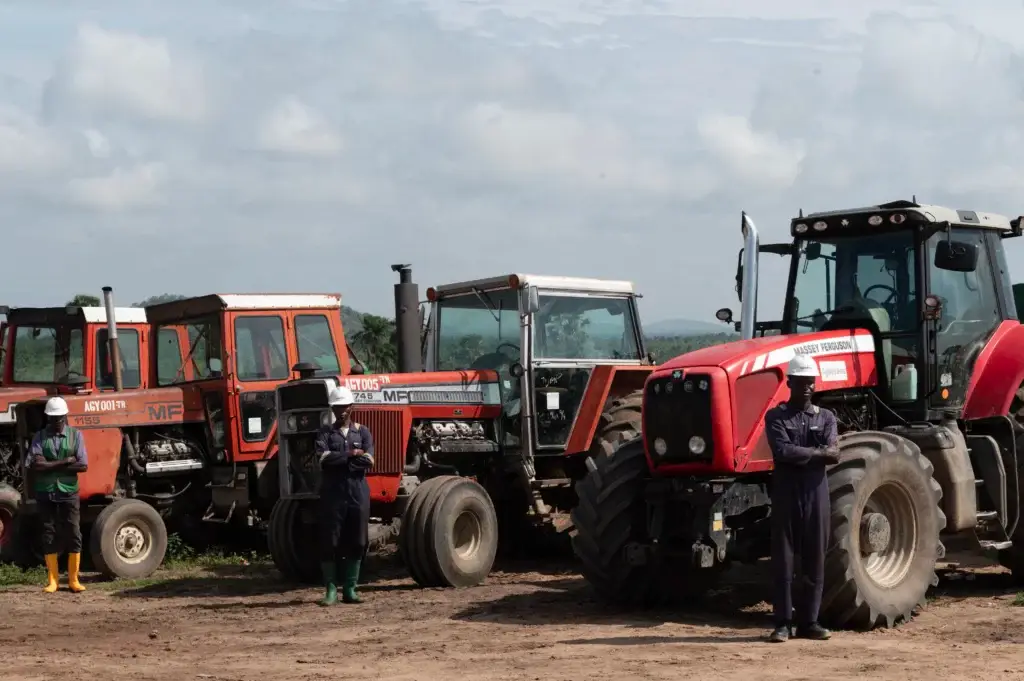
Agbeyewa Farms and Matna Foods, subsidiaries of Cavista Holdings, have adopted an integrated model that connects cultivation, aggregation and processing within a single value chain. Matna Foods, one of Nigeria’s oldest cassava processing companies, is undergoing significant modernisation under new ownership, with investments in processing infrastructure and commercial relationships designed to supply industrial-grade products to domestic manufacturers.
Psaltry International, founded by entrepreneur Yemisi Iranloye, has demonstrated how value addition can generate substantial economic returns. The company processes cassava into starch, high-quality cassava flour, glucose and sorbitol for industrial users, and its out-grower network illustrates how agro-processing can stimulate economic activity well beyond factory operations. Premium Cassava Products Limited, now part of the FMN Group, provides a further example of how private investment can connect agriculture with manufacturing through contract farming and industrial processing.
The future opportunity, however, extends beyond conventional processing. Research institutions are developing cassava-based bioplastics, biodegradable packaging materials and a growing range of renewable energy products from cassava by-products. A study by the Nigeria Cassava Investment Accelerator of Lagos Business School, Pan-Atlantic University, has argued that Nigeria’s opportunity to become the world’s leading cassava industrial economy is within reach, provided progress is made across the full ecosystem.
International cooperation is also creating new possibilities. The Alliance of Bioversity International and the International Center for Tropical Agriculture has worked with multiple countries to develop disease-resistant and climate-resilient cassava varieties, helping stabilise harvests and improve productivity in the face of climate variability.
What the experience of leading processors makes clear is that private investment alone cannot close the structural gap at national scale. Achieving meaningful industrial progress will require coordinated action across government, industry, research institutions and development finance. Infrastructure that reduces post-harvest losses, access to long-term capital for processors and farmers, and consistent enforcement of quality standards are preconditions, not optional upgrades.
Nigeria has held the world’s largest cassava harvest for decades. The more important measure, the one that determines whether that natural advantage becomes lasting economic value, is what happens between the farm and the factory. That is the transition this industry has been preparing for. The question is whether it is finally ready to make it.
Dr. Tony Bello is the Chief Innovation & Commercialisation Officer at Matna Foods Limited